

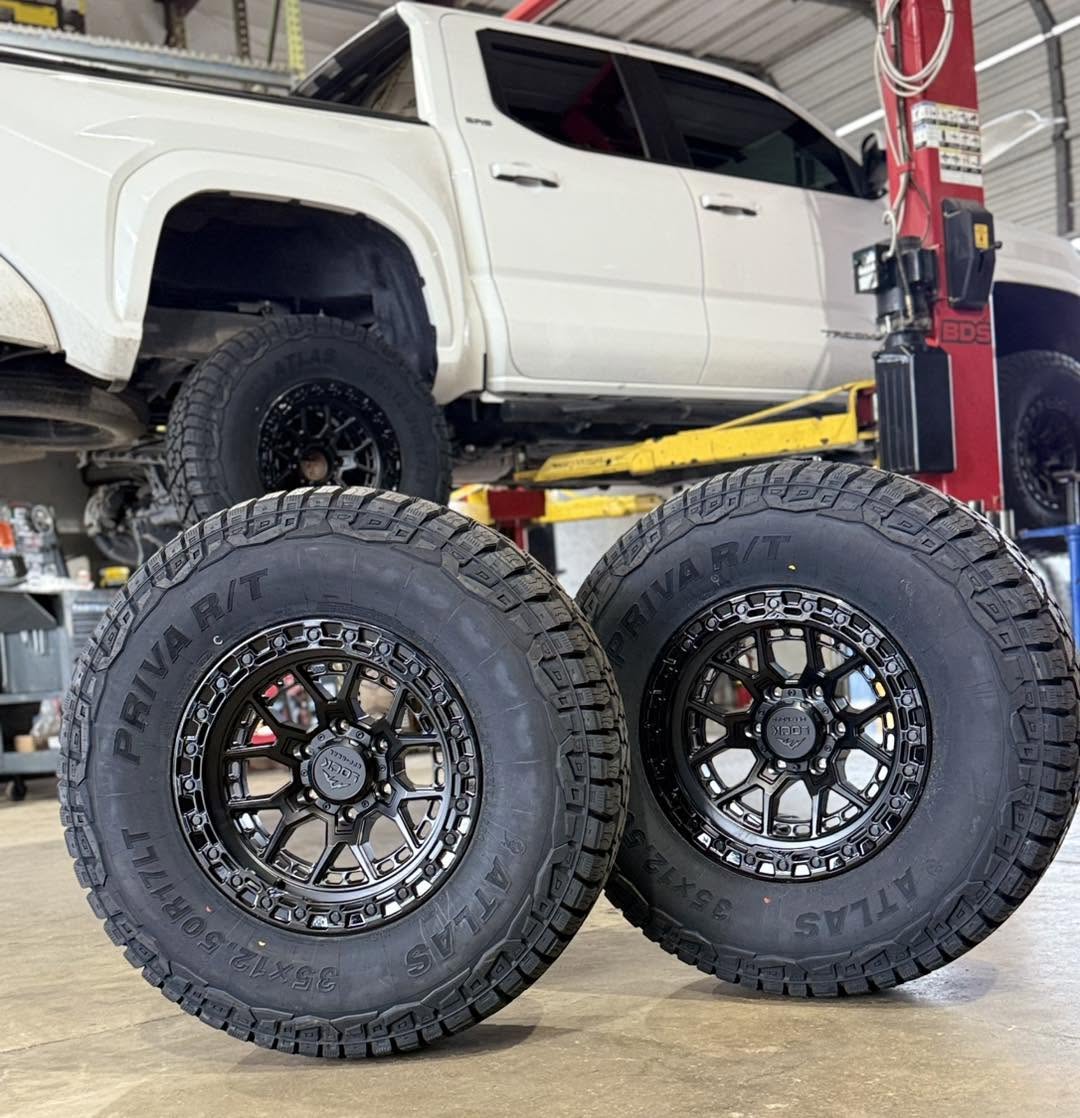
Truck owners around Katy have plenty of reasons to upgrade their wheels, tires, and suspension, from changing the stance of a daily driver to adding clearance for off-road use. But these upgrades work as a system. Choosing parts based only on appearance can lead to rubbing, poor ride quality, unwanted handling changes, or a truck that simply does not perform the way you expected.
Quick answer: Choosing the right wheels, tires, and lift kit starts with deciding how you actually use your truck. Daily driving around Katy calls for different priorities than towing, ranch roads, mud, or regular off-road driving. Wheel diameter and offset, tire size and construction, suspension height, clearance, alignment, and overall fitment should all be considered together before parts are installed.
What local truck owners should know
-
Larger tires can provide additional ground clearance, but they also add weight and can change acceleration, braking feel, gearing, and fuel economy.
-
Wheel offset and width affect both appearance and whether the tire clears suspension and body components.
-
A lift kit should be selected for the truck’s intended use rather than simply choosing the tallest option available.
-
Driving around Katy, Interstate 10, the Grand Parkway, and surrounding Fort Bend and Harris County communities makes on-road behavior an important part of any truck build.
-
Tire choice should account for Texas heat, highway driving, wet roads, jobsite conditions, and off-road use where applicable.
Why Does Choosing the Right Combination Matter in Katy?
Choosing the right wheel, tire, and lift combination matters in Katy because a truck still needs to handle everyday Texas driving after the upgrades are installed. A setup that looks impressive while parked should also provide appropriate clearance, predictable handling, and a usable ride for the owner’s normal driving conditions.
That matters for trucks traveling between residential areas such as Cinco Ranch and communities farther west toward Brookshire, as well as vehicles spending significant time on I-10 or SH 99. Highway driving can expose issues such as vibration, tire noise, poor alignment, or an overly aggressive tire choice that might not have seemed significant during a short test drive.
At O.S.O Customs WT, we approach wheel, tire, and lift choices as connected parts of a complete truck setup. Our goal is to help owners consider fitment and intended use together instead of treating each upgrade as an isolated decision.
What Do We See When Planning Local Truck Builds?
Our field approach is to start with how the truck will be driven, because intended use determines which compromises make sense. A daily-driven pickup, work truck, tow vehicle, and weekend off-road build can all benefit from upgrades, but they should not automatically receive the same wheel, tire, or suspension configuration.
A truck used primarily around Katy and the west Houston area may spend most of its time on pavement. In that situation, ride quality, highway behavior, tire noise, and practical clearance may matter more than maximizing lift height.
For trucks that regularly encounter ranch roads, construction sites, mud, or uneven terrain outside developed areas, additional clearance and a more aggressive tire may become a larger priority.
How Can the Wrong Setup Affect Your Truck?
The wrong setup can affect ride quality, steering feel, clearance, braking characteristics, tire wear, and everyday usability. Increasing tire diameter and changing wheel dimensions alters more than the truck’s appearance, so each change should be evaluated as part of the complete package.
For example, an aggressive wheel offset may push the tires outward for a wider stance, but it can also change clearance relationships around the fender and suspension. A substantially larger tire can improve ground clearance while adding rotating mass.
Likewise, suspension changes affect vehicle geometry. Alignment should therefore be part of the planning process rather than an afterthought.
What Warning Signs Suggest a Wheel, Tire, or Lift Setup Needs Attention?
Warning signs include rubbing, vibration, uneven tire wear, steering changes, clearance problems, and a truck that behaves differently than expected after modification. These symptoms should be evaluated instead of being dismissed as an unavoidable part of driving a modified pickup.
Watch for:
-
Tires rubbing during turns or suspension movement.
-
Steering wheel vibration at normal Katy-area highway speeds.
-
Uneven or unusually rapid tire wear.
-
A steering wheel that no longer sits correctly when traveling straight.
-
Pulling or wandering on the road.
-
New noises after suspension or wheel installation.
-
Insufficient clearance around suspension or body components.
-
Ride quality that is significantly different from what you expected.
Some changes in ride or road noise can naturally accompany larger or more aggressive components. Persistent rubbing, vibration, or abnormal tire wear deserves closer attention.
When Should You Have a Professional Check Your Truck?
A professional should check your truck when you are changing wheel fitment, substantially increasing tire size, altering suspension height, or experiencing rubbing, vibration, alignment problems, or unusual tire wear. Proper planning before purchasing parts can also prevent compatibility problems that become expensive to correct later.
Owners can safely monitor tire condition, visible clearance, and obvious changes in driving behavior. Fitment calculations and suspension modifications require more detailed consideration.
That is particularly valuable for a daily-driven truck covering miles between Katy, Richmond, Fulshear, Cypress, and the Houston area. A setup needs to work beyond the parking lot.
What Factors Commonly Cause Poor Truck Fitment?
Poor truck fitment commonly results from mismatched wheel offset, excessive tire size, insufficient clearance, or suspension changes that were not planned around the complete build. The most common problem is treating wheel, tire, and lift specifications independently.
1. Wheel width and offset
Wheel width and offset determine where the wheel and tire sit relative to the hub. Changing these measurements can move the tire inward or outward and affect clearance.
2. Tire diameter and width
Increasing tire dimensions changes available clearance. Turning and suspension movement also need to be considered, not just clearance while the truck is parked.
3. Suspension height
Lift height can create room for larger tires, but lift alone does not guarantee that every wheel and tire combination will clear properly.
4. Intended driving conditions
A tire suited to frequent off-road use may have different noise, wear, and pavement characteristics than a highway-oriented tire. For Katy drivers who spend considerable time on I-10 and other paved roads, those differences can matter every day.
5. Choosing appearance before function
A specific stance may be the goal, but the desired look should be planned around safe, usable fitment rather than forcing incompatible parts together.
How Should Katy Truck Owners Maintain an Upgraded Setup?
Katy truck owners should maintain upgraded wheels, tires, and suspension with regular tire-pressure checks, rotations, alignment monitoring, and inspections for unusual wear or looseness. Texas heat and frequent highway driving make tire condition especially important throughout the year.
Check tire pressure according to the appropriate specifications for your vehicle and tire setup, especially before long drives. Inspect tread and sidewalls regularly, and pay attention to new vibration or changes in steering.
After suspension work, follow the component manufacturer’s inspection and maintenance recommendations. If the truck develops abnormal wear or handling changes, have the setup evaluated rather than waiting for the next routine service.
What Results Should You Expect From a Well-Planned Truck Setup?
A well-planned truck setup should provide the stance, clearance, and capability you selected while remaining appropriate for the way you actually drive. The exact result depends on the truck, component specifications, lift height, tire design, and intended use.
A daily driver may prioritize a balanced appearance with manageable road noise and comfortable highway manners. An off-road-oriented truck may accept additional tire noise in exchange for traction and clearance characteristics suited to its intended terrain.
The best result is a combination selected deliberately rather than simply installing the largest components that appear to fit.
What Mistakes Should Truck Owners Avoid?
The biggest mistakes are choosing components separately, assuming bigger is automatically better, and overlooking how the finished truck will actually be driven.
Mistake: Choosing wheels before considering tire and suspension fitment.
Consequence: The desired tire size may create clearance issues.
Better approach: Plan wheels, tires, and suspension as one system.
Mistake: Selecting the tallest available lift simply for appearance.
Consequence: The finished truck may have ride or usability characteristics the owner did not expect.
Better approach: Match lift height to the desired stance, tire clearance, and intended use.
Mistake: Ignoring wheel offset.
Consequence: Tires can sit farther inward or outward than expected and potentially create clearance concerns.
Better approach: Evaluate wheel width, offset, tire dimensions, and suspension configuration together.
Mistake: Choosing aggressive tires for a mostly highway-driven truck without considering tradeoffs.
Consequence: The owner may experience more road noise or different pavement behavior than desired.
Better approach: Match tread design to where the truck spends most of its miles.
What Is a Common Katy Truck Upgrade Scenario?
A common Katy scenario is a truck owner who wants a more aggressive stance and larger tires but still uses the pickup for daily commuting and highway driving. The build needs to balance appearance and additional clearance with normal road use.
Instead of starting with the largest tire or tallest lift, the better process is to define the desired stance, identify realistic tire dimensions, determine compatible wheel specifications, and then select the suspension solution needed to make the combination work.
This approach is particularly useful for trucks that need to transition comfortably between neighborhood streets, Houston-area highways, jobsites, and occasional recreational use.
Which Services Help Create the Right Truck Setup?
Wheel and tire fitment, lift kit installation, and related customization services can help create a coordinated setup instead of a collection of individually selected parts. The planning stage is where owners can compare appearance, clearance, driving characteristics, and intended use before committing to a combination.
We can discuss the type of stance and capability you want and help you evaluate how the wheel, tire, and suspension choices work together.
How Do You Compare Different Truck Upgrade Options?
Comparing truck upgrade options starts with deciding which characteristics matter most, such as daily comfort, off-road clearance, appearance, towing use, or a balance of several goals. There is no single wheel, tire, and lift combination that suits every pickup or every Katy-area driver.
A mild setup can provide a noticeable visual change while retaining characteristics closer to the truck’s original configuration. More substantial modifications can accommodate a more dramatic stance or larger tires, but they can also introduce additional considerations involving geometry, clearance, weight, and drivability.
Highway-oriented tires generally prioritize pavement behavior, while all-terrain and more aggressive tread designs shift the balance toward loose surfaces and off-road conditions. Your actual driving habits should guide that choice.
Where Do We Help Truck Owners in the Katy Area?
We help truck owners in Katy and can discuss options with drivers from surrounding communities such as Fulshear, Richmond, Brookshire, Cypress, and the west Houston area. Local driving patterns can range from daily Grand Parkway commuting to jobsites and rural roads farther outside the metro area.
What Can Happen If You Ignore Fitment Problems?
Ignoring fitment problems can turn minor rubbing, vibration, or alignment symptoms into additional tire wear or component concerns over time. Modified trucks should be inspected when something changes rather than assuming every new noise or handling characteristic is normal.
A rubbing tire, for example, should not simply be accepted because larger tires were installed. Uneven wear also deserves attention because it may indicate alignment or another setup-related issue.
FAQ
What size tires can I put on my lifted truck in Katy?
The appropriate tire size depends on the truck, lift height, wheel width, offset, suspension configuration, and available clearance. A lift-kit height alone is not enough to determine fitment. Katy truck owners should evaluate the entire combination, including clearance while turning and during suspension movement, before selecting tires.
Do I need a lift kit to install larger tires?
A lift kit is not always required for larger tires because the answer depends on how much larger you want to go and your truck’s existing clearance. Some combinations may fit with minimal changes, while more substantial increases can require suspension modifications or other fitment considerations.
Are bigger wheels better for driving around Katy?
Bigger wheels are not automatically better for Katy driving because wheel diameter changes the tire options available and can affect the amount of sidewall in the setup. Owners who spend significant time on I-10 or SH 99 should consider ride preferences, tire availability, appearance, and intended use together.
Are all-terrain tires good for daily driving in Fort Bend County?
All-terrain tires can work for daily driving when their characteristics match the owner’s priorities. Different models vary in pavement noise, wet-road behavior, tread life characteristics, and off-road capability. Drivers should compare those factors against how often the truck actually leaves paved roads.
Does lifting a truck require an alignment?
Suspension changes can affect alignment geometry, so alignment requirements should be considered whenever a truck’s ride height or suspension components are modified. The correct procedure depends on the specific vehicle and lift system. Proper alignment also helps identify conditions that could contribute to uneven tire wear.
Can changing wheel offset make my tires rub?
Yes, changing wheel offset can contribute to rubbing because it changes where the wheel and tire sit relative to suspension and body components. Tire width, diameter, wheel width, lift height, and the truck’s specific geometry also affect clearance, so offset should never be considered by itself.
What tire type works best for Texas heat and highway driving?
The appropriate tire should meet the vehicle’s requirements and suit the driver’s normal combination of highway, city, worksite, and off-road use. Katy-area drivers should pay particular attention to tire condition and inflation during hot Texas weather and select tires based on their actual driving needs.
How do I choose between a leveling kit and a lift kit in Katy?
Choose between a leveling kit and lift kit based on the stance, clearance, tire size, and type of driving you want from the truck. A leveling approach and a more substantial suspension lift accomplish different goals, so the decision should start with the finished setup rather than lift height alone.
Build a Truck That Works for the Way You Drive
The right wheels, tires, and lift kit should work together to create a truck that looks the way you want while remaining suited to your everyday driving. For Katy-area owners, that means considering Texas highway miles, local roads, work use, and recreational driving before choosing the final combination.
Get the Right Fit for Your Katy Truck
We can help you evaluate wheel, tire, and lift kit options around your truck, desired stance, and intended use so you can make an informed choice.